
Elevating Design: Accessible Hardware Trends for Safe, Stylish Homes
When you think of accessibility, it’s easy to picture an institutional setting: Fluorescent lights, stainless steel grab bars and white tile floors. But as the population continues to age, accessibility is becoming an important component in everyday life.
According to the U.S. Census Bureau, in another five years, all Baby Boomers will be at least 65 years old. This “gray tsunami” will have a significant impact on housing. By 2034, these older adults will outnumber people 18 and under for the first time in United States’ history. As a result, this tsunami is making waves in numerous areas, including door and home hardware.
From preventing falls to easily opening doors, this growing demand for accessibility will change the way we design and build homes for years to come. The following are key trends to watch.
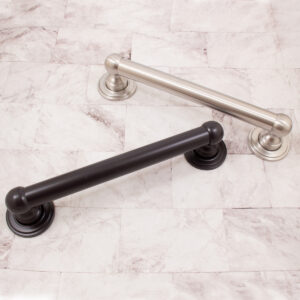 Decorative grab bars: Bringing safety and style together Preventing falls is critical for aging in place and maintaining accessibility. In addition to improving lighting and removing trip hazards like loose rugs, adding extra support in the form of grab bars is a key component to accessibility.
Grab bars, once synonymous with institutional design, can now be an intentional design choice. Numerous brands offer grab bars in various styles and finishes, making it easy to coordinate with door locks, bath hardware and other pieces in the home.
Low-profile showers: A no trip zone
As mobility becomes more challenging, stepping over a 6 inch shower curb or into a standard bathtub becomes more difficult, increasing the risk of falls. Low-profile showers offer an accessible solution during bathroom remodels. With a threshold of 2 inches or less, a low-profile shower removes a trip hazard in the bathroom (a common place for falls in the home), while creating a streamlined, modern look.
 Swing clear hinges: Widening the walkway
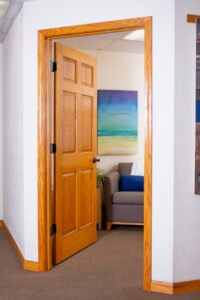
Since the passing of the Americans with Disabilities Act, wider doors (minimum of 36 inches) have become the norm in publicly accessible buildings. While single-family homes do not have to meet ADA standards, this trend has made its way to new construction in residential homes, as well. Wider openings make it easier to navigate through doorways with a walker, wheelchair or even a pair of crutches. However, millions of people live in older homes with narrow doorways, and not everyone who struggles with accessibility has the resources for a new build or a complete remodel.
Affordable, DIY-friendly options, such as swing clear hinges, continue to be a popular choice for people who need a few more inches of clearance. Swing clear hinges move the door out of the doorway, creating an unobstructed opening that can be easily navigated with a walker or wheelchair. These hinges are also available in popular finishes like matte black for a modern look.
 Door locks: Easy to open and operate
Choosing levers instead of knobs makes it easier to operate a door, especially if someone struggles to twist, grip or pinch a knob. Levers can often be operated with just the push or pull of a wrist, elbow or finger. ADA-compliant levers feature push-button locking on privacy locks, making them perfect for bedrooms and bathrooms.
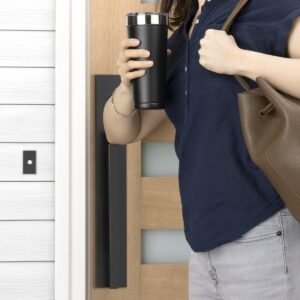
In addition, some newer lock designs can be operated with just a push or pull, bringing accessibility to everyone who’s ever tried to open a door with their arms full, proving that accessibility is truly for everyone.
Automatic operators: Hands-free access
Once primarily the realm of apartment buildings and other commercial settings, automatic operators are becoming an option for accessible homes. Newer designs are more affordable and feature a smaller footprint, making them feasible for home use. While they will require additional accessories like electric strikes, low-energy operators can be a valuable addition to an accessible home, especially when paired with a zero-barrier entry.
Because of their complexity, low-energy operators will require extra planning in the building process. It’s important to include them in the initial plans, rather than trying to retrofit them into an existing home. However, operating a door with a simple remote or sensor, rather than fumbling with keys, makes the extra planning worth it.
As an aging population creates more demand for accessibility than ever before, accessibility no longer means bland and institutional. From beautiful finishes to smart technologies, accessibility is now truly for everyone.
Editor’s Note: Article and photos provided by Stone Harbor Hardware.